Everyday Living In Different Corners Of Coral Gables
June 18, 2026
June 18, 2026
What does everyday life in Coral Gables actually feel like once you get past the postcards? If you are trying to buy, rent, or simply narrow your search, that question matters just as much as price or square footage. Coral Gables has a strong visual identity, but daily life changes from one area to the next, and knowing those patterns can help you choose with more confidence. Let’s dive in.
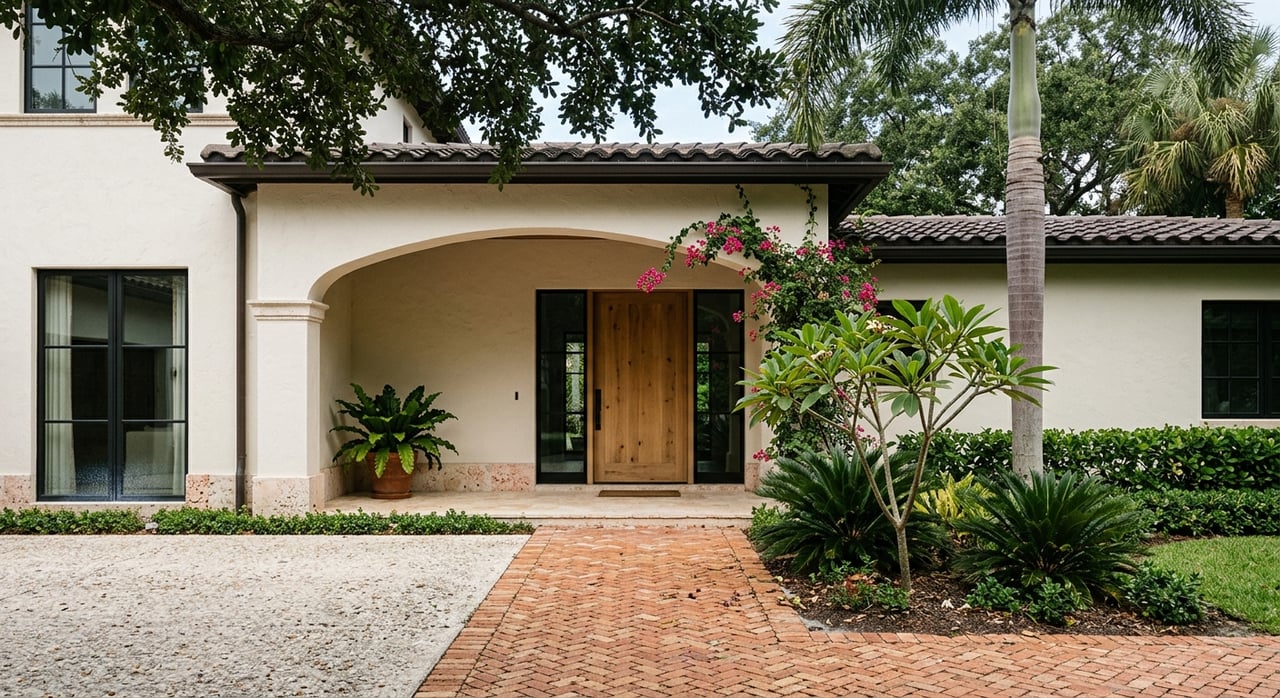
One reason Coral Gables feels so distinct is that it was planned with a strong design vision. The city describes it through its City Beautiful and Garden City roots, with lush green avenues and a built environment shaped by long-standing architectural standards.
That shows up in daily life in simple ways. Streets often feel landscaped and intentional, and the city maintains more than 40,000 trees and 380 green spaces. The city also says more than 1,000 properties are on its historic register, which helps explain why even routine errands can feel framed by architecture and greenery.
Landmarks are woven into the city rather than separated from it. City Hall, the Biltmore Hotel, Douglas Entrance, Venetian Pool, the Coral Gables Museum, and the MacFarlane Homestead district all help create a place where the setting is part of the lifestyle.
If you want the most walkable, active, and mixed-use part of Coral Gables, downtown is the clearest fit. The city defines the Central Business District as the area bounded by Navarre Street, Douglas Road, Almeria Street, and LeJeune Road, with a focus on preserving urban character, supporting pedestrian activity, and encouraging mixed use.
That planning approach shapes the everyday feel of the area. Ground-level open space is limited in the CBD, so life here tends to be more sidewalk-oriented than yard-oriented. You are more likely to picture storefronts, cafés, and apartment or condo living than detached homes with large outdoor space.
Miracle Mile is the center of downtown activity. The city describes it as a destination for dining, shopping, and entertainment, with Mediterranean-style façades, wide sidewalks, outdoor cafés, and shade from palms and oaks.
The city also notes that the district includes more than 120 international restaurants. For you, that can mean an easier time meeting friends for dinner, grabbing coffee, or building a routine around nearby options instead of driving for every outing.
Giralda Plaza gives downtown a more pedestrian-first pocket. This block is lined with restaurants, bars, and coffee shops, which adds to the sense that daily life here can feel active and connected.
If your ideal week includes walking to meals, meeting people nearby, or staying close to cultural and commercial activity, this corner of Coral Gables tends to deliver that experience most clearly.
Downtown also has some of Coral Gables' strongest transit and cultural connections. The city trolley links the CBD with Metrorail, Grand Avenue, and the historic McFarlane Homestead district, while Freebee offers free on-demand rides.
This same orbit includes the Coral Gables Museum, Actors’ Playhouse, the Art Cinema, and Gables Gallery Night. If you value being near events, public spaces, and flexible mobility, downtown stands out.
Move west and south of downtown, and the rhythm becomes quieter and more residential. This part of Coral Gables is closely tied to many of the city's best-known landmarks and classic architectural features.
The city's landmark pages highlight Mediterranean Revival and coral rock architecture at places like City Hall, the Biltmore Hotel, Douglas Entrance, Venetian Pool, and the Coral Gables Museum. That creates a setting with a slower pace than downtown and a stronger sense of historic continuity from block to block.
This central historic band is also one of the strongest areas for recreation. The Community Recreation Department manages the Biltmore Golf Course, the William H. Kerdyk Biltmore Tennis Center, the Salvadore Tennis Center, the Venetian Pool, the Granada Golf Course, and city parks and playgrounds.
That matters if you want everyday access to active amenities without leaving Coral Gables. The Biltmore course is an 18-hole Donald Ross design, and Salvadore offers 13 lighted clay courts, adding to the area's appeal for residents who enjoy golf, tennis, parks, and outdoor routines.
Some of the most distinctive residential pockets are the historic villages. The city identifies Dutch South African, Chinese, French Normandy, Florida Pioneer or Colonial, French Country, French City, and Italian villages, each with its own design language.
If you are drawn to homes and streets that feel visually specific rather than uniform, these areas deserve a close look. They can offer a very different experience from a standard subdivision, even within the same city.
The MacFarlane Homestead subdivision adds another layer to the historic core. The city says it is known for wood-frame vernacular homes built mostly between 1926 and 1939, and it is the only historic district in Coral Gables listed on the National Register of Historic Places.
For buyers who want smaller-scale historic streets and a strong sense of place, this area often stands apart. It is less about grand formality and more about historic texture and identity.
Farther south and toward the water, Coral Gables shifts again. This area tends to feel quieter, more private, and more connected to nature than the busier sections near downtown.
The city's parks and waterway information point to places like Matheson Hammock, Blue Road, Taragona Drive, the Islands of Cocoplum, and nearby shoreline and canal areas as part of this southern, water-oriented pattern. It is a different daily rhythm, with more emphasis on open space, water adjacency, and a calmer residential feel.
Matheson Hammock is one of the clearest examples of that lifestyle. The park spans 630 acres and includes an atoll pool, marina, restaurant, picnic pavilions, and nature trails.
If your ideal weekend includes being outdoors, near the water, or in a more nature-forward setting, this area may feel especially appealing. It gives the southern part of Coral Gables a distinct identity that is less urban and more relaxed.
Fairchild Tropical Botanic Garden strengthens that same character. The 83-acre garden includes rare tropical plants and butterfly exhibits, reinforcing the sense that this side of Coral Gables is shaped by landscape as much as by architecture.
For some buyers, that can be the deciding factor. If you want your surroundings to feel greener, quieter, and less tied to a commercial corridor, the southern sections often align with that goal.
The city's waterway and sea-level pages note active monitoring in areas including Blue Road, Taragona Drive, Islands of Cocoplum, and Matheson Hammock. That local focus on shoreline, canals, mangroves, and water levels highlights how important waterfront conditions are in this part of Coral Gables.
In practical terms, this side of the city often reads as more car-dependent than downtown. The most concentrated walkable amenities and transit connections are centered farther north, so your daily routine here may involve more driving and more home-centered living.
The best part of Coral Gables for you depends on how you want your normal Tuesday to feel, not just your dream weekend. A beautiful home in the wrong daily setting can still feel like a mismatch.
Here is a simple way to think about the city's main lifestyle patterns:
Coral Gables is not one-note, even though it has a strong citywide identity. The planned landscape, historic architecture, and public spaces create a consistent backdrop, but your day-to-day experience can still vary a lot depending on where you land.
That is why neighborhood-level guidance matters. If you are choosing between a condo near downtown, a historic residential street, or a quieter home farther south, the right answer usually comes down to your routine, your priorities, and how you want the area around your home to function.
If you want help comparing Coral Gables blocks, buildings, or residential pockets in a calm and practical way, Eric Firestone can help you narrow the options and move forward with more clarity.
Get assistance in determining current property value, crafting a competitive offer, writing and negotiating a contract, and much more. Contact me today.